

Sign in
If you do not have an account, click Create AccountCreate Account

To better support our customers, we’ve launched an upgraded member platform with improved access and exclusive benefits.
Some items are no longer available. Your cart has been updated.


This discount code cannot be used in conjunction with other promotional or discounted offer.

Raising prices in the vape export business is not simply a passive reaction to rising costs.
It’s a strategic move to reshape the industry value chain—and reclaim brand power in a market that has been trapped in endless price wars.
“Price wars have no future” is a common business truth.
But in the global vape industry, that truth has been hard to follow.
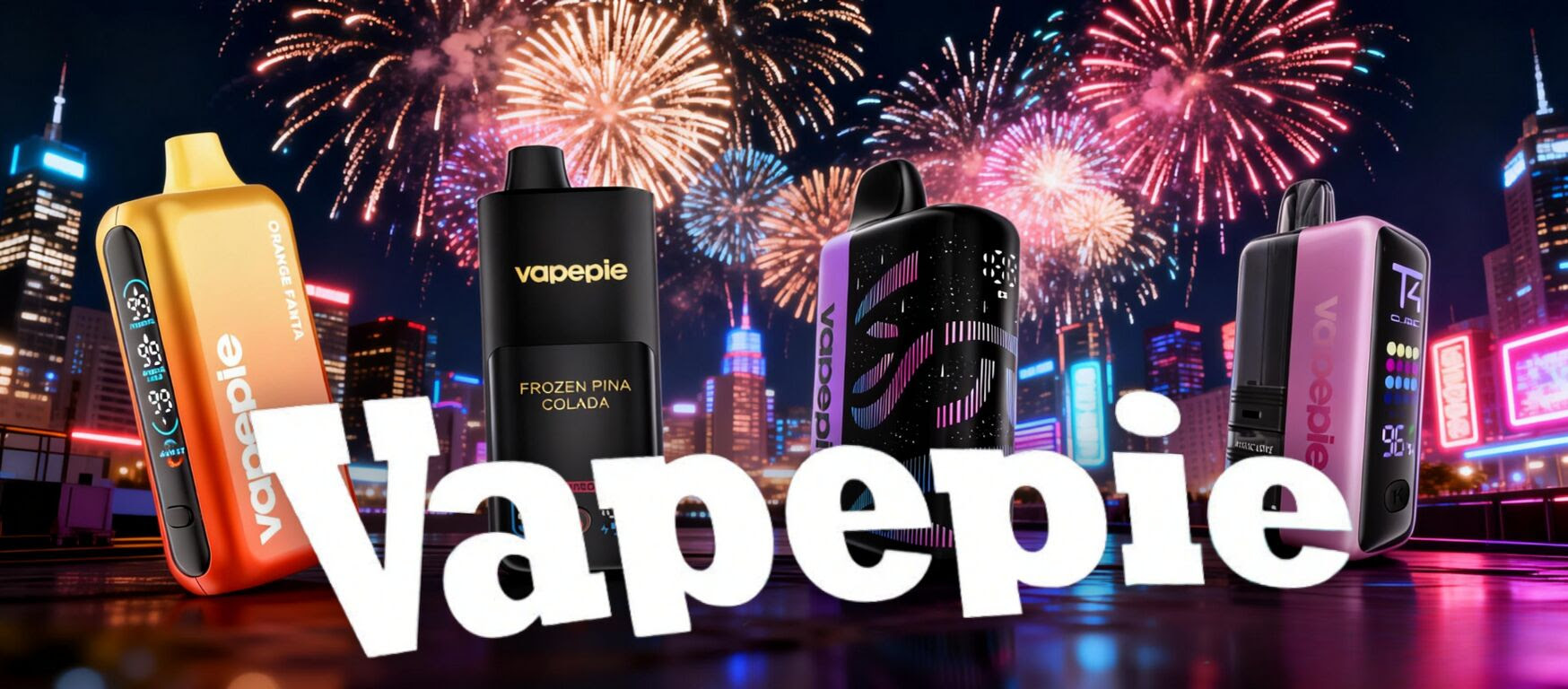
In 2026, export-focused vape brands are facing the most severe profit squeeze since the beginning of the overseas expansion wave: compliance costs are rising sharply, tax rebates are expected to disappear, and product homogeneity is pushing competition into a race to the bottom.
When gross margins stay below the industry benchmark, cutting costs alone is no longer enough to keep a business sustainable.
At the same time, stricter regulation worldwide is sending a clear signal: the vape sector is being pushed toward standardization, premiumization, and greener practices.
Consumers are changing too. “Good enough” no longer sells. Quality, safety, consistency, and user experience now matter more than ever.
The window for industry transformation is open.
Price increases shouldn’t be treated as a short-term tactic—they should be seen as a long-term strategy for brand upgrading and value reconstruction.
Over the past few years, Chinese vape exports have grown fast, gaining share across multiple global markets.
But behind the numbers, most companies are dealing with three serious challenges:
Compliance has become the heaviest burden.
Major markets continue tightening regulation—such as the EU’s evolving tobacco framework and the US PMTA system. Brands must spend heavily on product testing, certification, legal review, and documentation.
In the US market, the PMTA process can cost anywhere from hundreds of thousands to millions of dollars per product, with long approval timelines and high uncertainty.
Meanwhile, core material costs remain unstable. Batteries, chips, e-liquid components, and packaging are exposed to global supply chain fluctuations. Add rising international logistics expenses, and manufacturing costs climb even further.
At the same time, competition is becoming increasingly similar and predictable:
many players rely on shared molds, generic designs, and low pricing to win shelf space.
This creates a destructive loop:
price war → margin drop → quality compromise → even lower prices
In that environment, innovation slows down, brands fail to build long-term trust, and the entire industry’s value benchmark gets dragged lower.
For years, vape manufacturing has operated under thin margins.
Public market observations suggest that many OEM factories and small-to-mid brands sit below 30% gross margin, and some even below 20%.
Meanwhile, downstream retail and certain international brands capture far more profit, creating a structural imbalance across the value chain.
This matters because low margins make long-term investment difficult.
Without stable profit, businesses cannot sustain serious R&D, quality upgrades, or product differentiation.
What’s changing now is that the industry direction is becoming clearer:
regulators and policymakers are increasingly guiding the sector toward:
These are not buzzwords—they require real investment.
Smart features demand stronger safety controls, data systems, and better user protection mechanisms.
Premiumization requires material upgrades, industrial design improvement, and higher manufacturing standards.
Green transformation involves recyclable materials, lower carbon footprint, and better lifecycle management.
All of this costs money.
And that’s exactly why the low-margin model is starting to break.
Globally, vape products are becoming an increasingly important source of tax revenue.
Countries such as the UK, Germany, and the US have expanded taxation and brought vape products further into the tobacco regulatory framework.
In China, the vape tax policy is now clearer, and the industry is moving into a “post-tax-rebate” era.
This signals a new reality:
vape exports are no longer treated only as a manufacturing-driven growth story. They are also expected to contribute in terms of taxation and compliance responsibility.
Under this framework, keeping prices artificially low creates multiple problems:
Channel economics are also under pressure.
Long-term low pricing reduces distributors’ and retailers’ profit space, which kills motivation, reduces service quality, and eventually damages consumer experience.
A healthier ecosystem requires balance between:
A rational price increase can help rebuild that balance—while creating room for better products and stronger partnerships.
Price increases shouldn’t be framed as “passing costs to consumers.”
Done correctly, pricing is a strategic decision—one that shifts competition away from price and toward value.
The biggest benefit of proactive pricing is that it breaks the internal trap of low-price competition.
When everyone keeps lowering prices, the market doesn’t become bigger—it simply becomes cheaper.
The product category gets undervalued, and the industry loses its ability to evolve.
But price increases only work if they are backed by real value.
That value can come from:
The key is communication: brands must clearly explain the “why” behind the price adjustment to both channels and consumers.
When leading companies set a higher value benchmark, the global market perception can shift—from “cheap alternatives” to “reliable, innovative products made in China.”
Vape consumers are maturing quickly worldwide.
The purchase decision is no longer based only on “does it work” or “is it cheap.”
More users are evaluating:
In mature markets like Europe and North America, many consumers are willing to pay more for:
That shift forces companies to invest more seriously in brand building.
Brand building is not just advertising.
It’s about consistently delivering quality, maintaining stable standards, and behaving responsibly over time.
Consumer education is just as important.
Brands need to communicate clearly and transparently, including:
This reduces misunderstanding caused by information gaps—and builds a more rational, loyal customer base.
Those investments become long-term brand assets.
And a healthy pricing system is what funds them.
Looking ahead, 2026 may become a dividing line for the vape export industry.
Companies that stay addicted to low-price competition—and fail to create real value—will face tighter margins, weaker channels, and shrinking survival space.
The winners will be those who dare to exit the price war and move toward value-based pricing.
This isn’t about charging more for the same product.
It’s about building a product and brand that can justify a higher price.
For VAPEPIE, a successful price strategy should be built on one core principle:
Price based on value—not cost.
That means understanding what consumers truly care about, solving real pain points, and turning innovation into market recognition and brand premium.
To do this, VAPEPIE should focus on:
This is how VAPEPIE can move from “competing on price” to “winning on value.”
Because in the next phase of the global vape market, pricing power will belong to the brands that deliver the best combination of:
trust + experience + compliance + differentiation.

Comment